
Whimsy vs traditional disk catalogers
Traditional disk catalogers help you search offline drives. Whimsy expands that idea into a local-first search layer for external drives, NAS, cloud folders, object storage, and hosted workflows.
Read essayTraditional disk catalogers help you search offline drives. Whimsy expands that idea into a local-first search layer for external drives, NAS, cloud folders, object storage, and hosted workflows.
Read essay
Nextcloud, Seafile, File Browser, rclone, Synology, and Whimsy all promise a private family cloud. The real test is whether non-technical relatives can use it without turning one person into weekend IT support.
Read essay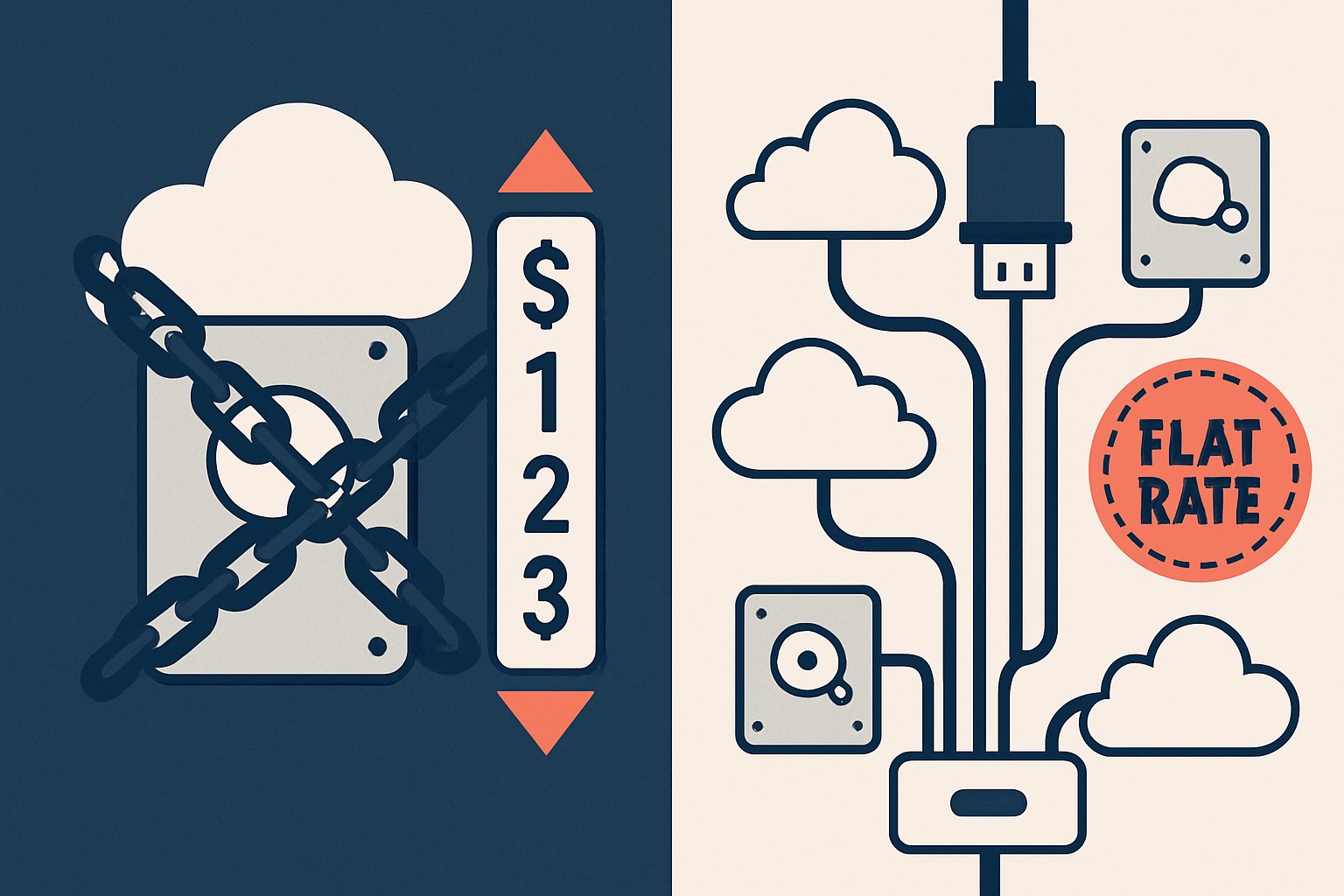
Most DAMs charge per terabyte and trap your files on their servers. BYOS keeps your storage and keeps software flat at $20/mo.
Read essay
A mixed iPhone-and-Android household does not need one giant shared account. Keep personal libraries private, use one shared family archive, and separate everyday sync from real backup.
Read essay
Most cloud libraries stop at auto-tagging. Whimsy uses AI to curate your portfolio, suggest client sequences, and speed up the edit.
Read essay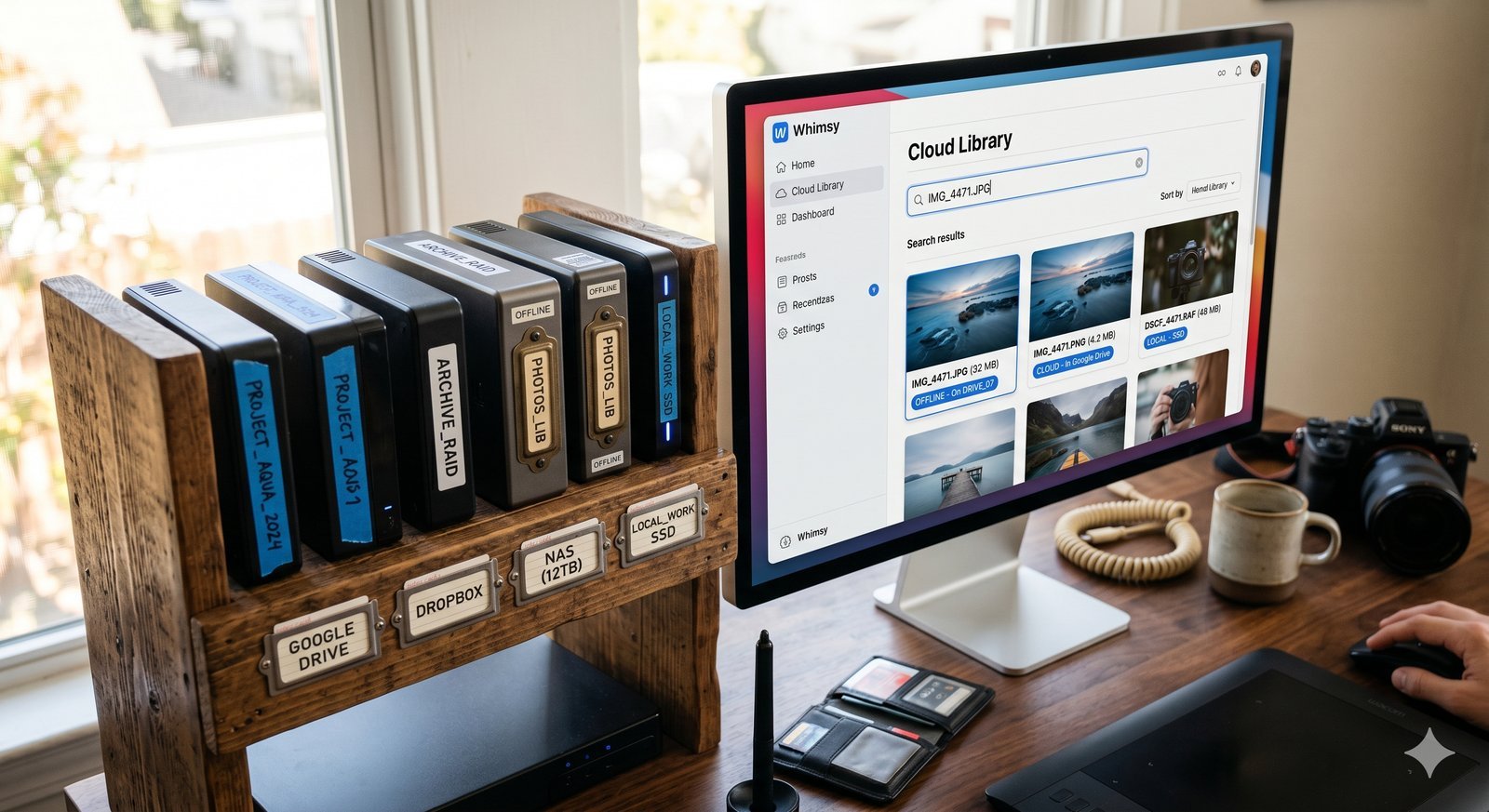
Whimsy helps turn disconnected drives, NAS volumes, and cloud folders into one searchable file catalog.
Read essay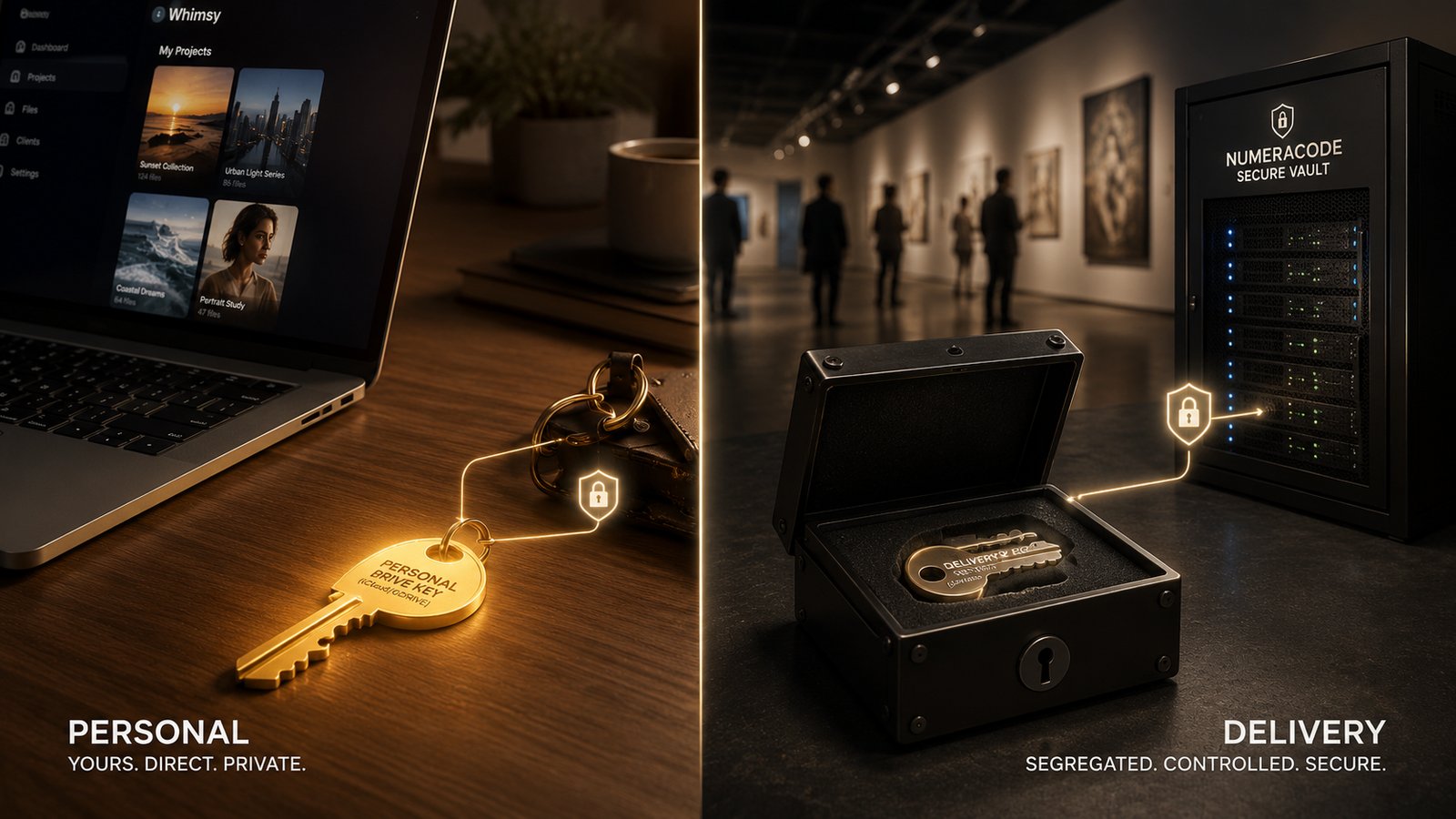
In Whimsy, where your cloud login lives depends on the cloud type. Personal drives stay on your machine via the local connector; always-on storage is encrypted on our servers. Here is why.
Read essay
Yes, you can create a photography portfolio from Dropbox or Google Drive without moving your photos. Here is the simpler workflow, the tradeoffs, and what still separates a folder from a real portfolio.
Read essay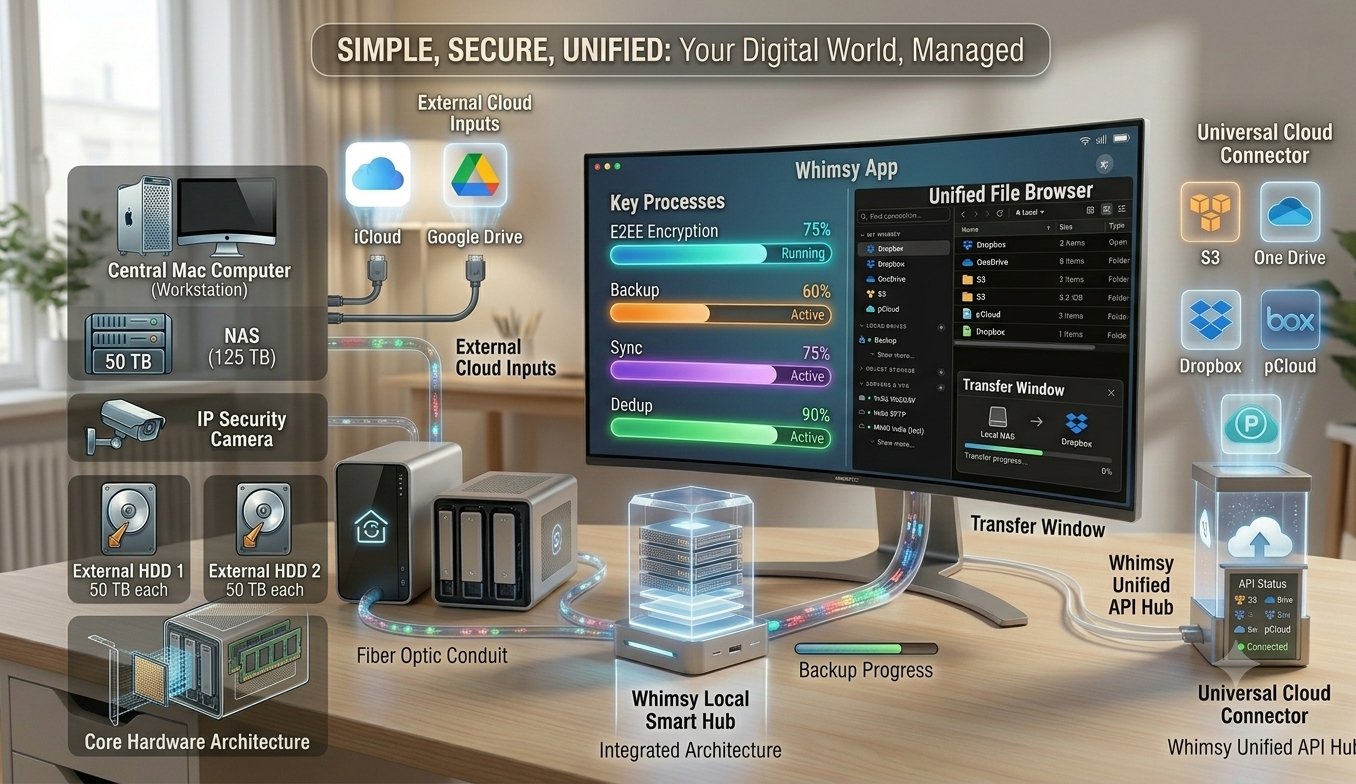
Most photographers still juggle Drive, Dropbox, and hard drives. Here's why the $7B DAM industry still doesn't serve creators — and what actually does.
Read essay
A practical comparison guide for teams choosing a multi-cloud file manager that respects privacy and keeps file contents out of AI training.
Read essay
Updating a portfolio is a multi-hour chore, so most creators never do it. A dream client asks for your latest work — and you send a link you have to apologize for.
Read essay
The smartest creators in 2026 aren't stepping on the production treadmill. They're mining the gold sitting dead on their hard drives.
Read essay
Shooting a wedding is fast now; finding the thirty frames worth delivering is the slow part — especially when they're scattered across clouds and drives.
Read essay
Year 2 of running a Whimsy-first stack: $780 per year, fourteen minutes of glue work per shoot, and the four things that broke before the four that held.
Read essay
Sending the gallery is the halfway point. The other half is what happens after the client opens the link: a private review flow and a testimonial you control.
Read essay
A working wedding photographer runs four to six paid tools just to deliver one shoot: gallery, proofing, contracts, invoicing, and backups. There is a simpler way.
Read essay
Editors don't need more free gigabytes. They need fast partial sync, proxy-friendly workflows, and a single source of truth that doesn't vanish mid-project.
Read essay
Your files are split across multiple cloud accounts. Here's how to consolidate Google Drive, Dropbox, and OneDrive into one searchable dashboard.
Read essay
Dropbox, Google Drive, and OneDrive keep files in sync. That's exactly why none of them is a backup. We explain the difference and what to do instead.
Read essay
Leaving Google Photos usually means downloading your whole library to a laptop first. Here's how to move photos and videos straight to another cloud instead.
Read essay
Move your Dropbox files to Google Drive without re-downloading everything. A step-by-step guide to cloud-to-cloud migration that saves time and bandwidth.
Read essay
rclone, MultCloud, Movebot, CloudFuze, and Whimsy all move files between clouds. They differ sharply on price, privacy, and who they're built for.
Read essay
Every best cloud storage guide ranks free space and price, then skips the number that actually traps you: switching cost. Here's how to avoid lock-in.
Read essay